Water utilities that respond fastest to main breaks share one thing in common: stocked clamps on the truck, not in a 6-week supply chain. But most utilities over-stock some sizes and under-stock others, spending more than they need for worse coverage than they think. This post is about getting the inventory strategy right.
The ABC analysis
Break your clamp inventory into three categories:
A-items — sizes you use more than 10× per year. For a typical municipal utility, this is usually DN100, DN150, and DN200. You need:
- 2–3 units per crew truck
- 5–10 units in central warehouse
- Minimum 1 spare on top of average weekly consumption
B-items — sizes you use 3–10× per year. Typically DN50, DN80, DN300. You need:
- 1 unit per crew truck for the common ones
- 2–5 units in central warehouse
- Buffer based on lead time
C-items — sizes you use less than 3× per year. Typically DN400 and up, plus odd sizes. You need:
- 0–1 in central warehouse
- Supplier commitment to ship within 72 hours if needed
- Don’t try to stock everything
The mistake most utilities make: stocking C-items at A-item levels because “what if.” Carrying a DN1000 clamp you’ll use once in 10 years costs more than the insurance policy covering the rare event.
The 80/20 rule applied to clamps
Pull the last 3 years of pipe repair records and sort by diameter. For most urban water distribution systems:
- 80% of breaks occur on 20% of sizes — usually DN100 + DN150 + DN200
- 15% of breaks on the next 20% of sizes — DN50, DN80, DN250, DN300
- 5% of breaks on the remaining 60% of sizes
Your A-item stocking should cover the top 20% that drives 80% of breaks. B-item stocking covers the middle. For the long tail, accept that you’ll wait for delivery on a rare oversized break.
If you haven’t done this analysis: pull the data. The result usually surprises operations teams. Utilities often over-stock on sizes that haven’t broken in years and under-stock on the sizes that break every month.
Lead time buffer math
Your buffer stock = (consumption during lead time) × safety factor.
For A-items at a medium utility:
- Consumption: 2–5 units/month of DN100
- Lead time from a responsive supplier: 15 business days (3 weeks)
- Safety factor: 1.5× (accounts for variability + multi-break events)
- Buffer = 5 × 0.75 × 1.5 = ~6 units
Your reorder point is: buffer + normal consumption during lead time = roughly 15 units for a DN100 at that utility.
When stock hits reorder point, place the order for replenishment. Don’t wait until stock is zero — that guarantees a stockout during the next bad break.
What “emergency kit” should actually contain
A fully-equipped emergency repair truck should carry:
Common clamps (A-items):
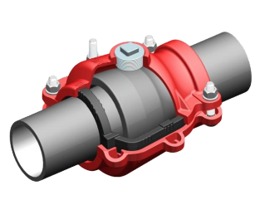
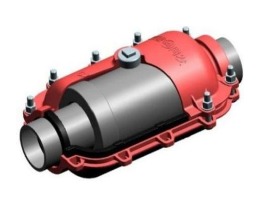
- 3× DN100 socket repair clamps (or equivalent for your dominant pipe material)
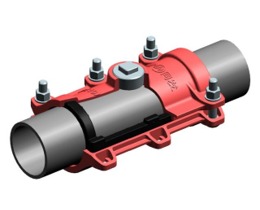
- 3× DN100 straight-pipe repair clamps
- 2× DN150 each type
- 2× DN200 each type
Less common (B-items):
Specialty:
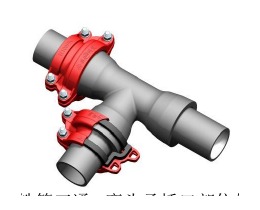
- 1× galvanized steel union + tee + elbow clamps (if gas distribution is part of the utility)
- 1× plastic pipe tee and elbow clamps
Non-clamp items:
- Calibrated torque wrenches sized for each clamp’s bolt torque
- Pipe calipers (at least 300 mm range)
- Saddle sealant or gasket grease (installation aid, not sealant substitute)
- Clean rags for pipe surface prep
- Wire brush, scraper for pipe surface cleaning
Total truck cost (for the clamps alone): typically $15,000–$30,000 stocked. That’s the insurance policy.
Stock rotation
Rubber gaskets and epoxy coatings don’t last forever. Rules:
EPDM gaskets in sealed packaging: typically good for 5–7 years at room temperature. After that, oxidation reduces seal performance. Rotate older stock to new trucks as normal attrition; discard if >10 years old.
NBR gaskets: 3–5 years shelf life, shorter than EPDM. Rotate faster.
Epoxy coating on stock clamps: degrades under UV. Store indoors, out of direct sunlight. Good for 10+ years in proper storage; check before deploying any clamp that’s been sitting for 5+ years.
Bolts: stainless bolts last indefinitely. Carbon steel bolts pick up surface rust in humid storage. Replace bolts in stock over 5 years if surface rust is visible.
Document stock dates: every clamp that comes in gets a sticker with date received. Rotate oldest first.
Cost benchmarks
For budgeting purposes, approximate unit costs (ex-Shanghai FOB, USD, 2025 pricing, typical volumes):
| Size | DI Socket clamp | DI Straight clamp | Plastic clamp |
|---|---|---|---|
| DN50 | ~$35 | ~$30 | ~$25 |
| DN100 | ~$55 | ~$45 | ~$40 |
| DN200 | ~$120 | ~$100 | ~$85 |
| DN300 | ~$220 | ~$180 | ~$150 |
| DN500 | ~$450 | ~$370 | — |
| DN800 | ~$1,100 | ~$900 | — |
| DN1200 | ~$2,800 | ~$2,400 | — |
| DN1600 | ~$5,500 | ~$4,800 | — |
Add shipping, duties, and local markup. Your actual landed cost in North America or Europe is typically 1.4–1.8× the FOB price.
Blanket purchase agreements vs. spot buying
For A-items and frequent B-items, a blanket purchase agreement with a qualified supplier is usually the right model:
- Commit to an annual volume (e.g., 100 units of DN100 per year)
- Supplier holds dedicated stock for 3-day shipment
- Unit price locked for the year
- Invoice monthly on actual draw
This reduces cost 10–20% versus spot buying, and cuts emergency lead time from weeks to days. The tradeoff is commitment — if you over-forecast, you still owe the minimum volume.
For C-items, spot buying with a pre-qualified supplier list is usually better than trying to stock rarely-used sizes.
PipeKnot offers blanket agreements for utility customers with annual volumes of $25,000+ across our product range. Talk to our sales team about what structure works for your operation.
Key metrics to track
The three metrics that actually tell you if your stockpile is healthy:
1. Stockout events per quarter — when did your crew need a clamp you didn’t have? Goal: zero A-item stockouts, <2 B-item stockouts per quarter.
2. Days-since-last-use per SKU — for C-items, if a clamp hasn’t been used in 3+ years, reconsider whether you should stock it at all.
3. Average age of on-truck stock — target <3 years for gaskets. Rotate actively.
Further reading
- Water main break response: the first 60 minutes
- How to choose the right pipe repair clamp
- Pipe repair clamp standards compared
- Hot tapping vs. full shutdown: real cost comparison
Note: Pricing benchmarks in this article are approximate and based on typical FOB Shanghai pricing for PipeKnot products as of 2025. Actual pricing varies by volume, specification, and market conditions. Contact sales for current quotes on your specific requirements.