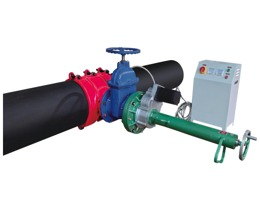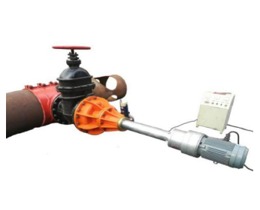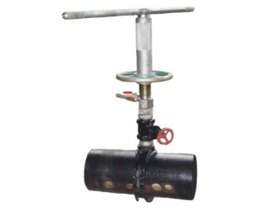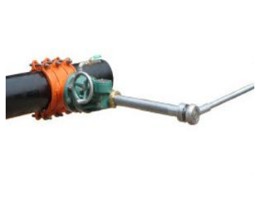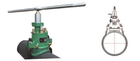
Hot tapping works by design when it’s done right. The machine clamps down, the valve isolates, the cutter pierces the pipe under pressure, and a new branch is live without a shutdown. It fails catastrophically when crews skip safety steps — and “catastrophic” on a gas line means fire or explosion. This post is the pre-job checklist we recommend running before any hot tapping operation, mapped to the US OSHA and NFPA standards that most utilities and contractors are bound by.
The basic structure of these rules applies outside the US too: most jurisdictions have a version of the same permit-to-work and fire-watch framework. Even when you’re working in China, Saudi Arabia, or Brazil, the logic holds.
Step 1: Hot work permit — before anything else
Regulation: OSHA 1910.252(a)(2) — requires a written hot work permit for cutting, welding, or any operation that produces an ignition source, in an area where flammable materials may be present.
What the permit covers:
- Specific location, duration, and scope of work
- Fire hazards identified and addressed
- Fire protection equipment on standby
- Fire watch assignment
- Authorized by a designated supervisor — not self-issued by the crew
If your crew is pulling up to a site without a permit in hand, you’re starting in violation. The permit is not a formality; it’s the document that forces each hazard to be addressed before the job begins.
Step 2: Confined space assessment
Regulation: OSHA 1910.146 — permit-required confined spaces.
When does hot tapping happen in a confined space? More often than crews realize. Below-grade valve vaults, pipeline trenches deeper than 1.5 m with restricted ventilation, and enclosed pump houses can all meet the confined-space definition.
Confined space checklist:
- Atmospheric testing before entry: oxygen (19.5–23.5%), LEL (lower explosive limit, <10% for entry), toxic gases (H₂S, CO) below PEL
- Continuous atmospheric monitoring during work
- Mechanical ventilation in place
- Standby person outside the space with rescue capability
- Supplied-air respirators if atmosphere cannot be maintained safe
If the tap is in a confined space with potential flammable atmosphere — STOP. The hot work + confined space combination requires both permits and additional controls. Don’t proceed on verbal sign-off.
Step 3: Atmospheric testing (even outside confined spaces)
Even in open-air taps, check the atmosphere around the work area before starting:
- LEL meter reading below 10% (OSHA permissible for entry into confined spaces; stricter limits apply for hot work in some AHJs)
- Downwind of the tap location — if there’s any chance of gas venting from the pipe during the operation (worn valve packing, old PE fittings under pressure), the downwind area must be clear
If LEL is above 10% at any point — purge the area with ventilation before proceeding, and re-test.
Step 4: Equipment isolation and placement
Regulation: OSHA 1910.252(a)(1)(iii) — equipment placement for hot work.
- Gas cylinders and welding machines stay outside confined spaces during hot work in those spaces
- Torches and hoses are removed from the confined space when not in active use (not just “set aside”)
- Oxygen and fuel gas cylinders are never brought into confined spaces
For hot tapping specifically: the tapping machine itself is fine inside the work area (it’s not an ignition source when properly maintained), but any welding or cutting required for saddle installation should follow these separation rules.
Step 5: Fire watch
Regulation: NFPA 51B — Standard for Fire Prevention During Welding, Cutting, and Other Hot Work. The minimum fire watch duration after hot work ends is 60 minutes, not the older 30-minute OSHA minimum. Many jurisdictions have adopted NFPA 51B explicitly.
Fire watch requirements:
- Dedicated person — not a crew member also doing other tasks
- Trained on fire extinguisher use
- Extinguisher immediately available (the right type for the fuel in the area — typically Class B for hydrocarbons)
- Continues for 60 minutes after hot work ends, watching for smoldering ignition
In industrial settings with many fuel sources or high fire load, the fire watch can be extended beyond 60 minutes. Your permit should specify.
Step 6: Pre-tap pipe integrity check
This is not a safety regulation per se, but it’s the safety step most likely to fail an otherwise well-planned job:
- Verify pipe material — hot tapping on corroded or cracked pipe can cause rupture
- Verify wall thickness — the tapping machine needs minimum wall thickness to engage safely. Each model has a spec: our DK6 machine tolerates DI and steel pipe from DN80 to DN600; our DK8 extends to DN800 on steel and DI.
- Check for unmarked prior taps — a pipe with two existing taps nearby has reduced structural integrity
- Ground the tapping machine — especially important on gas lines to prevent static ignition
Step 7: Saddle weld-out inspection (if applicable)
For welded saddles (as opposed to bolted split-tees):
- Weld quality check — visible porosity, undercut, or lack of fusion disqualifies the saddle for hot tapping
- Pressure test the saddle weld — many utilities require a 1.5× operating pressure hold before tapping through the saddle
- Qualified welder — welds on pressurized pipe are a specialty; certification matters
For bolted split-tees (our saddle clamps for DI pipe): visual inspection of gasket seating, torque verification on all bolts, and pre-tap pressure check.
Step 8: Tapping operation monitoring
Once the hot tap is underway:
- Slow, steady feed rate — per machine manufacturer spec (our DK8 manual specifies feed rates for each pipe material)
- Monitor chip return — the cutter should produce consistent chips; sudden changes mean the cutter has broken through, struck a pipe anomaly, or stalled
- Keep the area clear — no foot traffic within 3 m of the tapping machine during operation
- Coupon capture — never skip the coupon retention mechanism; losing the coupon downstream is a nightmare to retrieve and can block valves
Step 9: Post-tap valve closure and machine removal
Once the coupon is retrieved and the cutter is through the pipe:
- Close the isolation valve before removing the tapping machine — the machine body is the only thing keeping the newly-opened branch contained
- Verify the valve has closed fully — don’t trust the handle position alone; confirm via pressure gauge or flow
- Slow pressure relief on the machine body before disconnection
- Install the branch connection — typically a flange or threaded connection, torqued and pressure-tested before return to service
What the post-tap report should include
For good practice and liability protection:
- Permit number and sign-off
- Atmospheric test readings before, during, and after
- Fire watch start and end times
- Crew names and certifications
- Equipment used (machine model, cutter size, saddle type)
- Pressure during tap, after tap
- Anomalies (chip irregularities, valve difficulties, any near-miss)
- Return-to-service time
Good utilities archive these for 10+ years. Insurance and regulatory audits can reach back further than you’d think.
Common violations we see
From our conversations with utility crews across 15+ countries:
- No permit — “we’ve done this a hundred times” is the most common pre-incident statement
- Fire watch doubling as crew — one person can’t watch for fire AND operate the machine
- LEL meter not calibrated — meters drift; annual calibration is mandatory, and many we see are 3+ years overdue
- Inadequate ventilation — “the breeze is enough” is not an engineering control
- Skipping the pre-tap pressure test — especially on older welded saddles
- No coupon retention check — costs hours of downstream cleanup when the coupon drops into the line
The equipment matters — but procedure matters more
A certified crew with a well-maintained DK6 machine and a rigorous safety checklist will out-perform a pressured crew with brand-new equipment every time. Invest in training and procedure before you invest in more machines.
When you’re ready to buy, browse our tapping machine range or talk to our engineering team — we include safety training on the DK series purchase, and we ship with the operator’s manual that includes the manufacturer’s pre-tap checklist.